|
Before memory learned to behave itself, the world broke in a way that never truly healed.
The ancients do not describe the Cataclysm as fire or flood, but as forgetting made physical—a desiccation-blight that seeped into matter and taught it the concept of ending. Stone began to unwrite itself. Rivers forgot their paths mid-flow. Flesh aged not forward, but sideways, as if time had lost patience with continuity. The gods did not reverse this collapse. They responded by carving exceptions into reality: sacred geometries—Pyramids, Obelisks, impossible alignments—where existence could temporarily pretend it still had permission to persist. Outside those zones, the world quietly returns everything to its pre-name state. Inside them, reality behaves as if being observed is enough to justify staying real.
From this contradiction the first Dynasty was not founded—it was coagulated.
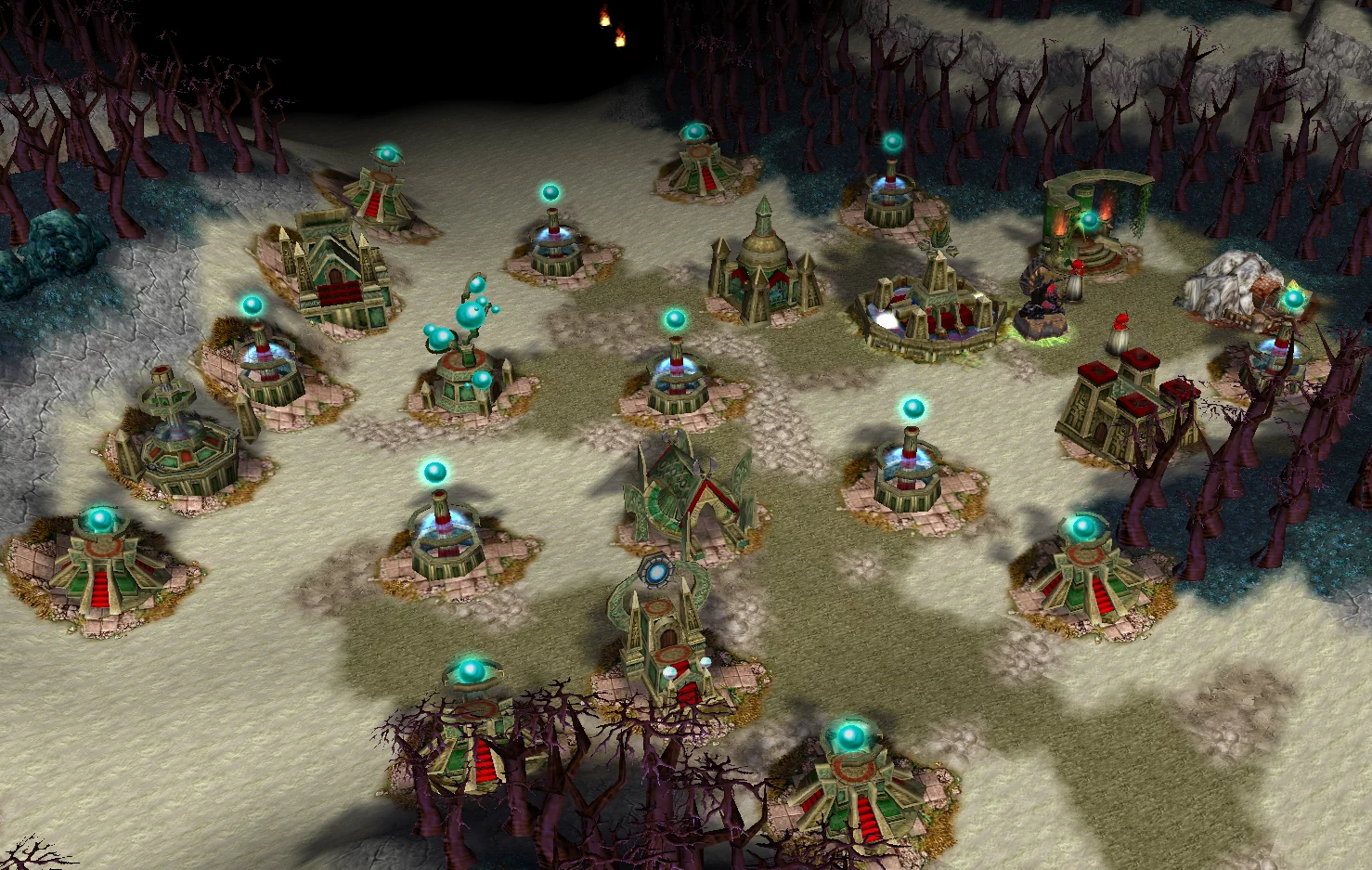
Survivors of the unmaking learned quickly that identity was a liability unless it could be anchored. So they began binding themselves to permanence that was not truly permanent: skin traded for stone, breath folded into mineral memory, living essence preserved in ritual wrappings like sealed arguments against oblivion. These were not enhancements. They were negotiations. To remain “human” was to be temporary. To remain anything at all required structural compromise with eternity. Their cities followed the same logic—too burdened to remain rooted, too sacred to collapse completely. Entire strongholds lifted from the earth and drifted like wounded gods refusing burial, carried along invisible currents of divine attention.
And then came the Schism—not political, not philosophical, but ontological. Ka and Neithis were not chosen; they were recognized. Ka is what refuses disappearance: the stubborn continuation of form, the insistence that something must persist even when it no longer resembles itself. Neithis is what insists that persistence is theft: that all things must eventually be reclaimed, reduced, and returned to the world’s neutral hunger. The Dynasty did not debate these forces. They built themselves between them, like a civilization suspended over a bottomless argument that never stops speaking.
From that tension, war became incidental.
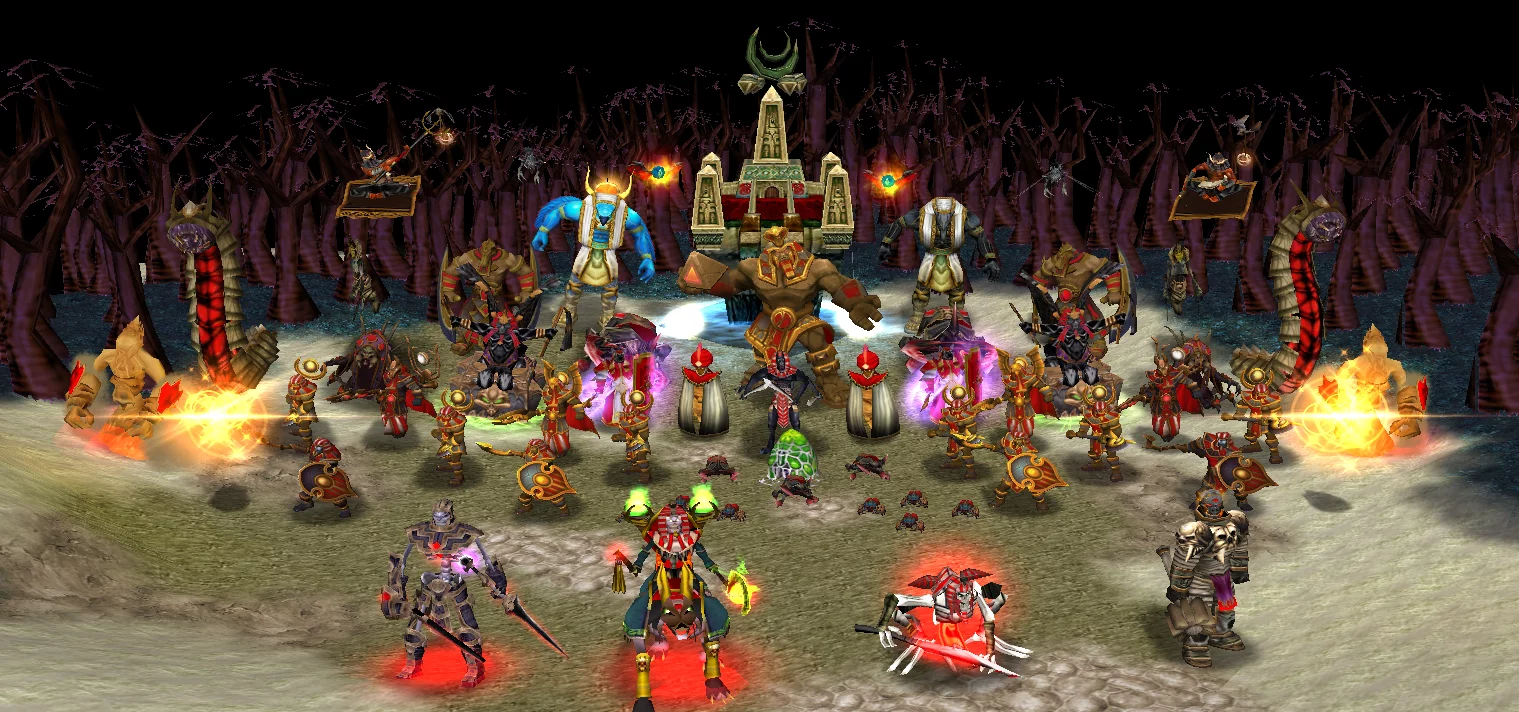
Their so-called armies are not assembled—they are recalled. Stone-bound giants that wake only when preservation demands violence. Wrapped revenants whose identities are unrolled like scrolls of intent. Obsidian hierarchs whose thoughts are too heavily layered to belong to a single lifetime. Every act of battle is simply the world testing whether something still qualifies as allowed to remain.
Death does not interrupt them. It processes them.
A fallen Dynasty warrior does not end. They are redistributed into the ecology of persistence—broken into scarabs of memory, rewritten into drifting ash-patterns, reinserted into another vessel that has agreed, for now, to continue being them. Even cities participate: when they fracture, they do not collapse—they multiply their ruin into new architecture.
And above it all, the gods remain distant not out of neglect, but because attention is the only force strong enough to stabilize existence—and even divine attention has fatigue.
In time, outsiders would mistake them for an empire. But the Dynasty was never an empire. It was a collective answer to a single, ancient question spoken by a broken world:
How long can anything remain itself before the universe remembers it was always meant to be dust?
|


 Approved




 Good job overall, but needs some polish ^^


